Ask any student who’s had the misfortune to end up in my classroom over the years what I answer when asked how I know some obscure datum about nineteenth-century baseball or Swedish salmon soups, and—if they’ve been listening—they should invariably respond with what genuinely first came to mind, long before I decided it would be a running joke:
“I read.”
Once upon a time, that was emphatically the case. However, if I’m going to get through this article, circumstances force me to admit (because at Christmas you tell the truth) that it’s less true than it once was. Whether due to steadily increasing age, tragically decreasing executive function, frankly overwhelming stress, or interminably alluring video games, each year it feels like I’ve read less than the previous one. I don’t think this is a shocking revelation: I usually read before going to sleep, and ceteris paribus, it’s going to be harder to fall asleep in the middle of a pulse-pounding murder mystery set in Oslo than halfway through an exhaustively-cited article about hoplite tactics, even if the latter is technically more up my alley.
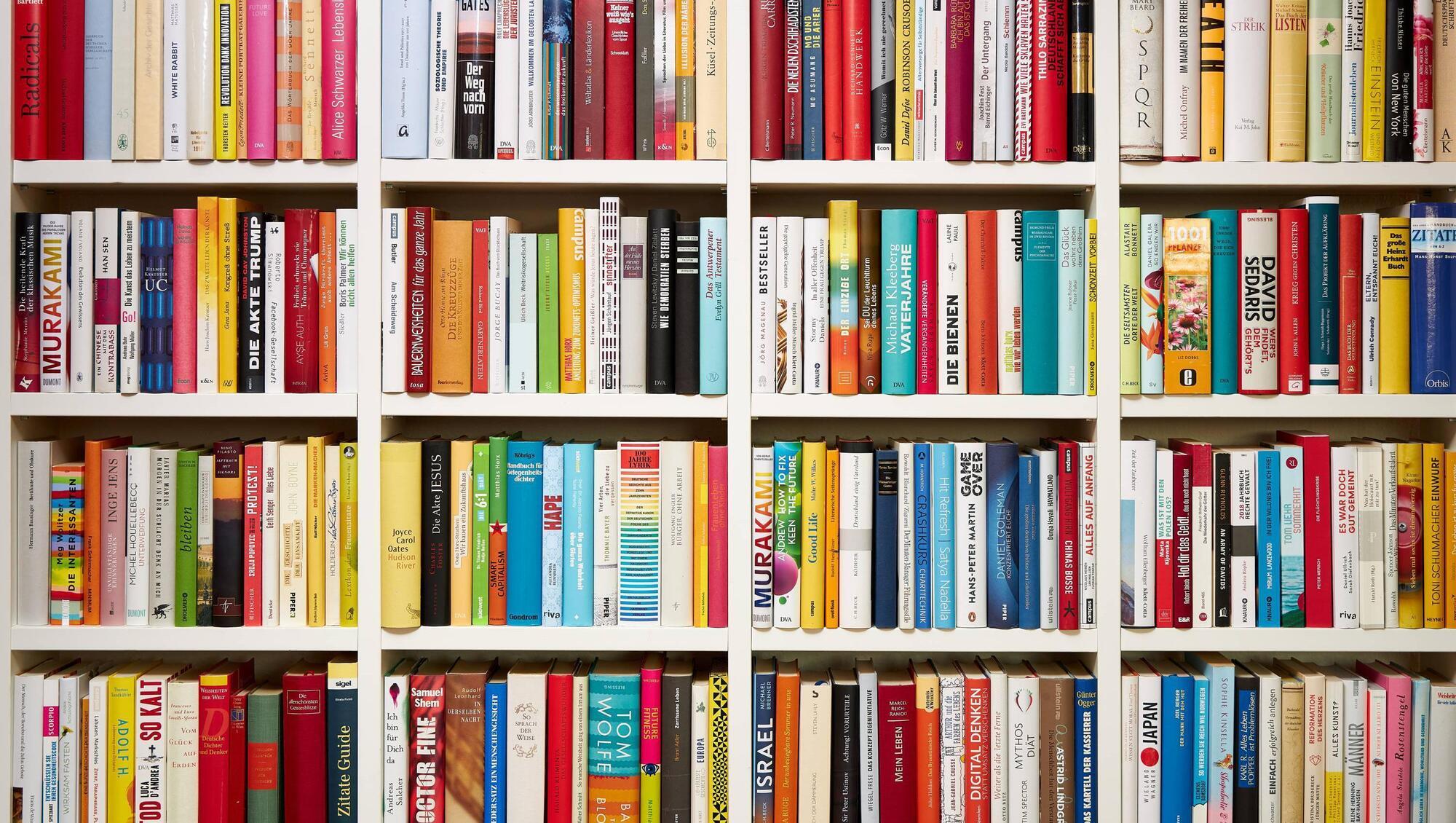
That’s a problem. Not only because I theoretically like reading, and not just because I was once the kind of bibliophage who could devour an entire novel over the course of a single night, but because it means I own a lot of books I haven’t read. Let’s annoy Mrs. Ringwood and do some extremely unrepresentative sampling: the bookshelf easiest to see from where I’m sitting right now contains 29 books. Of those, I’ve read 11.
That’s just under 38 percent. That’s less than four tens. And that’s terrible.
Now, I will confess that part of the fault is mine. I used to buy books like Kyle Schwarber bunts in World Series games: for no reason whatsoever. The detritus of my Amazon, Barnes & Noble, Borders, Elliott Bay Book Company, and other visits lies scattered across three full-size bookshelves, three smaller bookcases, and a number of nooks, crannies, and piles around my house. I did not buy all of these books myself, and I did not buy all of them for pleasure: I still own the vast majority of my college textbooks and dictionaries. Nonetheless, they sit there, reminding me of how many of them have the least-cracked spines on Earth.
The problem is that other part. The part where friends, relatives, coworkers, people who know full well that I like reading, give me books for my birthday, for Christmas, for Easter, for Epiphany, whatever, and because I did not buy these books myself, I am in no way predisposed to actually reading them. I want to be clear: for the most part, these were gifts from people who understood me well enough to know what I want in a book. They didn’t just go find whatever was on top of the NYT Best Sellers List or check their Goodreads feeds. They used the C.H.E.E.R. Method, or something quite like it, to find something they thought I’d like. I’m the failure here for not honoring their gifts by engaging with them.
Every so often, though, in haste or stress or worry or whatnot, a wonderful person trying to be generous will get me a book that I immediately know I won’t read, and moreover, I immediately also know that I will not feel even the slightest pang of guilt for not reading it. Perhaps you’ve been in this same boat. Perhaps you’ve even been in both boats: the harried, stressed, worried person desperately trying to check off a box by finding a present for a bookish friend, and the friend who has to feign interest in a book they might as well use to line cookie tins.
If so, while I really can’t help you decide what you should get this person—that’s Thomas Steele’s department in this issue, although I would heavily suggest getting them Night Watch, because it slaps—but I can tell you what to avoid. To wit:
- Books with a single-word title, followed by a colon and a much longer subtitle. I was going to call this the Gladwell Titling Method, but he’s actually only done this twice (Blink and Outliers). However, I think he exemplifies the kind of trend I’m talking about here: books that take an understandable insight and, because pop science/psychology/history/etc. requires a Big Idea that subordinates all desire for accurate information, proper sourcing, or even basic rigor, blow up that understandable first insight into something impossibly authoritative. “Your first impression might be more correct than a heavily-informed study” is a perfectly fine thing to think, if you qualify it with the fact that those correct first impressions are usually based on arduously-gained and long-practiced expertise. “It takes a lot of practice to properly master something” is not a new idea, but tacking on a fancy number like “10,000 hours” (about which there is some serious question) gets you a Macklemore* song. What I’m trying to say is that this titling style is very common for airport reads for a reason: it is emblematic of the kind of book that pretends to be much more widely applicable than it actually is.
- Books about social problems that confirm everything you think about that problem. I am not about to tell you that phones are a good thing: I am exactly as beholden to mine as every other millennial, and whenever I catch myself scrolling for longer than ten minutes, I’m fairly annoyed at myself about it. I notice when someone’s eyes glaze over mid-conversation because they’re either looking at their phone or thinking about their phone. I can see when my students check out on me mid-sentence, and I’m not sure if it makes me feel worse if they don’t realize it. So far, I sound like the target audience for The Anxious Generation, a book I know has gotten a lot of attention . . . but there are serious questions about Haidt’s framing of the problem, let alone his evidence or conclusions, that make me question my own convictions on the subject. Good books in these genres exist, but it’s worth checking what actual academics in the field have to say. That’s not a popular opinion, but if you want to know stuff, go to the people who get paid to know stuff. Hint: they get paid a lot less than the guy who writes popular books.
- Autobiographies, memoirs, etc. I should qualify this one: I think there is a use to reading someone’s own words and getting their perspective, especially on important events to which the public at large may not be privy. Unfortunately, I’m also trained in eras of history where we simply don’t have the perspectives of huge parts of the population; the ones we do have are self-serving to a fault; and we are very, very bad at separating the author from the text. So when I read, say, CIA director Richard Helms‘ autobiography (a real present given to me by my mother), it’s hard not to feel a little like I’m reading Cicero justifying putting Roman citizens to death without trial.
- Authorized biographies of Silicon Valley CEOs. Until Walter Isaacson figures out he’s not supposed to take everything his subjects say at face value, it’s probably better to just give this category a miss. I’d love to show you my sourcing for that, but most of it is based on his recent book Musk, which means that the articles I could show you all contain quotes from his subject, and a surprising amount of them have inappropriate language I shouldn’t put in the Shield.
- Fiction books in the process of being made into a movie. This is the Kobayashi Maru of buying books as presents. If the book stinks, you just gave someone a bad book as a present. If the movie stinks, which it is likely to do because adapting books into movies takes effort and a lot of people don’t do it well, you just made someone sit through a bad movie. If the book and the movie both stink, now you’re not invited to Christmas next year. If the book and the movie both stink, but in different ways: congratulations! For some reason, you gifted someone The Da Vinci Code in 2025.
- Self-help books. Actually, are these still a thing? I don’t remember the last one to get famous after 12 Rules for Life. I admit I’ve had a real hatred of the genre ever since my parents gave me Dr. Phil’s kid‘s books when I was thirteen, but I don’t think it’s a particularly irrational one: roughly all of these books will tell you the same thing, which is that you have to stay calm, commit to the changes you want to make in your life, and that, ideally, you should think about the effects of your actions on other people. A decent number of them purely exist to tell you that you should just be okay with getting laid off. I suppose it’s less invasive than covering someone’s first therapy session, but I think that’d be the more useful present.
To be clear, if the choice is between reading and not reading, I prefer reading. Having said that, if you’re thinking of getting someone these kinds of books and they didn’t ask you specifically for it, just get them Tinker, Tailor, Soldier, Spy or something.
Whatever you celebrate this holiday season, I hope it’s a great time filled with family, food, and fantastic reading. See you on the other side.
* Macklemore Gladwell. Is this anything?