
Nowadays, Valentine’s Day is known as a day celebrating love and romance across the world, but its origins are not as well known. Valentine’s Day is actually based on the feast day of Saint Valentine, a Christian saint. But how did this religious festival celebrated for nearly a millennium change into a secular tradition?
The original Valentinus, or Valentine, was a bishop of the early Christian church in the third century. He was born in Italy in 225 AD, and became a strong member of the rapidly growing underground Church. [Ed. Note—his name literally means “strong,” and between Valens, Valentinus, Valentinianus, and others, there seem to have been about three thousand names all from this root in this era of the Roman Empire. This will become relevant later.] He was known for both his scholarly work in defending the faith and his help to other Christians. Several miracles are attributed to him, including restoring sight to the blind. He is also known for his conversion of many people to Catholicism through his ardent faith and miracles in God’s name. This all occurred during the Roman persecution of Christians, where those who openly supported the church were executed.
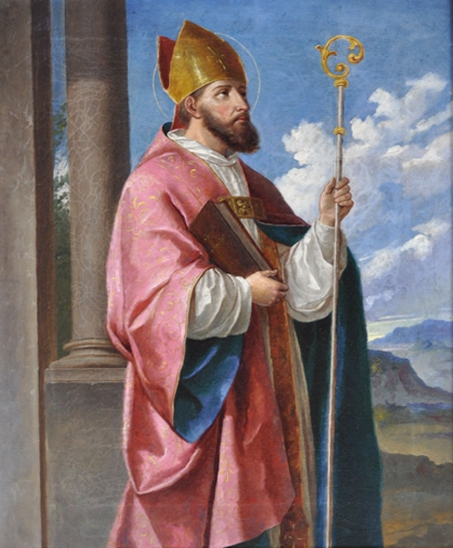
However, likely his most famous service as a religious figure was performing weddings between Christian couples, which is believed to have eventually led to his discovery. He was arrested but refused to denounce his faith, leading to beheading on February 14, 269. The story of many early Christian martyrs were written down, and Valentinus was an admirable figure, becoming especially well known for his act of marrying many Christians in secret. This led to his day of martyrdom becoming a celebration of love.
As a Christian saint, St. Valentine is the patron of several different things, not only those related to love. He is the patron saint of engaged couples, happy marriages, and love, but also of epilepsy and against fainting. This is because the miracles he performed included healing a young child who suffered from epilepsy. He is also especially venerated for his refusal to denounce the faith, even at the expense of his own life.
The date of February 14th had additional connotations for Romans in the time of St. Valentine and beyond. The feast of Lupercalia was celebrated in Rome between the 13th and 15th of February. This festival was a major event, originally known as februa, named after a Roman god of purification. The later name, Lupercalia, is believed to have derived from lupus, or wolf. There were several rites associated with the holiday, including the sacrifice of male wolves and dogs. The Luperci, a group of Roman priests dedicated to the festival, prepared and completed the rites. Lupercalia was believed to have several benefits for the Roman people, including a cleansing or purging of the city (as seen by the original name). Additionally, the Luperci would run around the city of Rome dressed in only loincloths and an ointment made of oil and blood, carrying strips of hardened goat leather. It was believed that women who were hit with the strips, which now had the name of februa, would conceive if they had not already, and have successful pregnancies if already with child.
Given the overlap between dates of Lupercalia and St. Valentine’s Day and the ostensible similarity of romance and fertility, it could be easy to assume that the St. Valentine’s Day is based on Lupercalia. However, the two feasts are not believed to be connected, as the romantic connotations of St. Valentine’s Day developed later in time.
Although it did not originally begin to be recorded as a romantic occasion, Valentine’s Day was celebrated as the Feast of Saint Valentine starting in the 8th century. The idea of it becoming a celebration of love dates as far back as the 13th or 14th century, which was around the time when the idea of having a “Valentine” emerged. Lupercalia did not have significant connections to romantic love itself, distinguishing it from St. Valentine’s Day.
The writings which led to the modern celebration of the holiday were originally developed while not connected to Lupercalia. Around this time, stories of St. Valentine’s blessings of marriages were widespread, along with the belief that birds paired during the early spring, around St. Valentine’s Day. These factors combined, leading to the choice by writers during the 13th and 14th century, especially Geoffrey Chaucer, to develop traditions treating the holiday as a celebration of romance.
This tradition has obviously changed, and now becomes a global and commercial phenomenon based on the idea of romance. However, it’s still important to consider where our modern traditions come from and how we might honor God through our love for others.