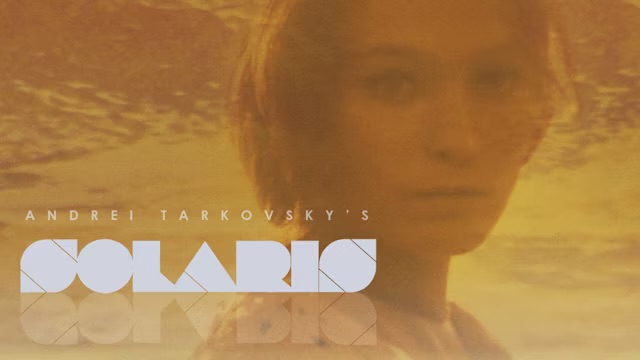
In 1968, Stanley Kubrick released 2001: A Space Odyssey in theaters. This film is considered one of the greatest science-fiction films of all time. In 1972, Andrei Tarkovsky released the film Solaris, produced by Mosfilm, in response to it. Solaris, in many ways, is the exact opposite of 2001. Despite the footage of nature at the beginning, the entire film may not even take place on Earth, but on the planet Solaris. To entertain the viewer, the film relies on a combination of beautiful camerawork, suspense that Solaris’ interactions with the space station brings, and the psychological horror of the mystery of the planet Solaris.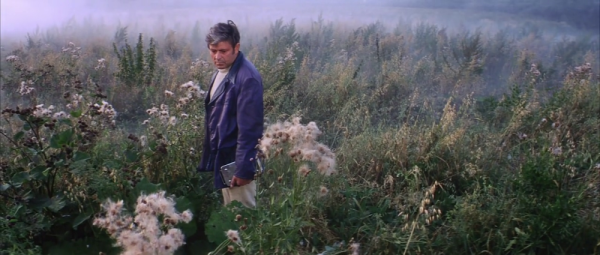
Plot
Solaris is about a cosmonaut named Kris Kelvin, who goes to a space station near the planet Solaris. There he finds his wife Hari, who is supposed to be dead. The woman he finds at the space station, however, is not his real wife, as she is found to be dying and coming back to life over and over again. Even though it is revealed many times that she is not real, Kelvin believes that she is. This situation leads to his eventual sickness, and the copying of Earth by the planet Solaris.
Kelvin’s belief that Hari is real presents itself as a portrait of dependency. Even though he knows that she is an apparition, he still believes that she is his wife. He simply cannot believe that she isn’t. Two other crew members, named Snaut and Sartorius, prove to him many times that she isn’t human, and he simply does not care. Kelvin shows the alien who is impersonating Hari footage of himself and his family on Earth, and she makes up stories about her experience. Kelvin is in many ways a prisoner of his own human emotions, whose captor is using him and stealing information from him about Earth.
Throughout Solaris, Kris Kelvin is seen to be kneeling before Hari and his father, who appears on the planet Solaris’s recreation of Earth. Solaris is like a counterfeit deity in this way, as it attempts to please man while trapping him at the same time. It gives him what it thinks he wants, and uses it to make him worship itself and ensnare him.
Cinematography
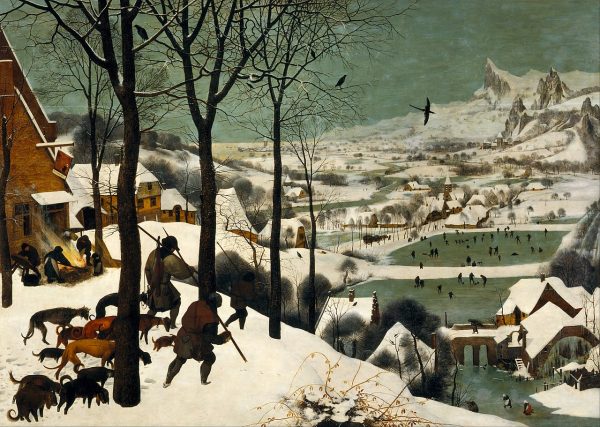
From the beginning of the film to the end, Solaris has excellent camerawork. Some highlights include the scenes in which Tarkovsky films Earth, Solaris and scenes within the space station, each of which have their own soundtracks. An especially great scene sees Tarkovsky film a Pieter Bruegel painting (The Hunters in the Snow). This scene uses the theme from Earth (Bach’s Chorale) to illustrate the origin and connection to the real world that this painting has. A technique that Tarkovsky likes to use in Solaris (as well as Stalker) is changing the color filters in the film based on a certain presence. An example of this in Solaris is when the film goes to black and white when a different presence enters the space station, specifically an apparition of Kelvin’s mother and Earth. This could represent an entrance into the mind of Kris Kelvin by Solaris, and how the apparition of his mother is a counterfeit one compared to the footage of his mother he shows Hari (which is in color).
Soundtrack
The composer who made the soundtracks for Solaris, Stalker, as well as another film called Mirror, is named Eduard Artemyev. He made electronic music for many Russian films during the late twentieth century, and used a particular kind of composition style for Tarkovsky’s movies. For the most part, Tarkovsky did not want music that would distract the viewer from the camerawork. In order to achieve this goal, Artemyev created a kind of music that became one with the camerawork. Most of the time, in Solaris, you may not even be aware that the soundtrack is playing, except for when Bach’s Ich ruf zu dir, Herr Jesu Christ is played. It is at the final scene that the soundtrack reveals itself for what it is, when the same Bach composition is played with electronic effects. This theme shows a fabricated Earth, based on the captive mind of the cosmonaut who worships it.
Artemyev uses a technique called cantus firmus, which was used by Johann Sebastian Bach, on the Solaris soundtrack. Cantus firmus is used to create a whole piece of music around a central theme, which for Solaris is Ich ruf zu dir, Herr Jesu Christ. Artemyev used his own compositions and adaptations to create the cantus firmus format around Bach’s composition.
Conclusion
Solaris can be watched in many ways, but the entire film is free on YouTube through Mosfilm. Please note that this film is not for those short in patience: it is almost three hours in length. The film, however, is amazing and should be watched by anyone who likes science fiction, or great movies in general.