Kei trucks, also known as mini trucks, are small pickup-style vehicles that come from Japan. The word kei means “light” in Japanese, and that’s exactly what these trucks are. They are simple, cheap, reliable, and extraordinarily practical. But if they are so great, why aren’t they everywhere in the U.S? This comes down to their imported status. Because they were not intended for the United States domestic market (USDM), they do not pass emissions and crash testing. However, other hazardous (and fun) vehicles like motorcycles being fully legal in the U.S. leads to the question: Could this legislation just be protecting the sales of $60,000 American trucks from brands like Chevy, Ford, and Ram? Let’s take a closer look.
Most Kei trucks are less than eleven feet long and around five feet wide, with tiny engines that are usually around 660cc. (For reference, some motorcycles have engine displacements that exceed 1000cc.) They usually have manual transmissions and flatbeds or dump beds. Suzuki, Honda, Daihatsu, and Subaru have been making them for decades. Their reliability has stood the test of time and the massive production numbers mean that they can be found for dirt cheap.
A lot of used Kei trucks end up in the United States because of a loophole commonly referred to as “the 25-year rule.” This NHTSA regulation says that vehicles older than 25 years old can be imported into the U.S and do not have to pass emissions or crash test ratings needed for modern cars sold in the states. This opens the door for these trucks to be brought over to America.
In the states, these trucks have a cult-like following, and I am a proud member. Because they are so plain and simple, the modifications that can be performed on them seem endless. They are also very fun to drive in their stock form; an article in The New York Times describes them as “road-worthy go karts.”
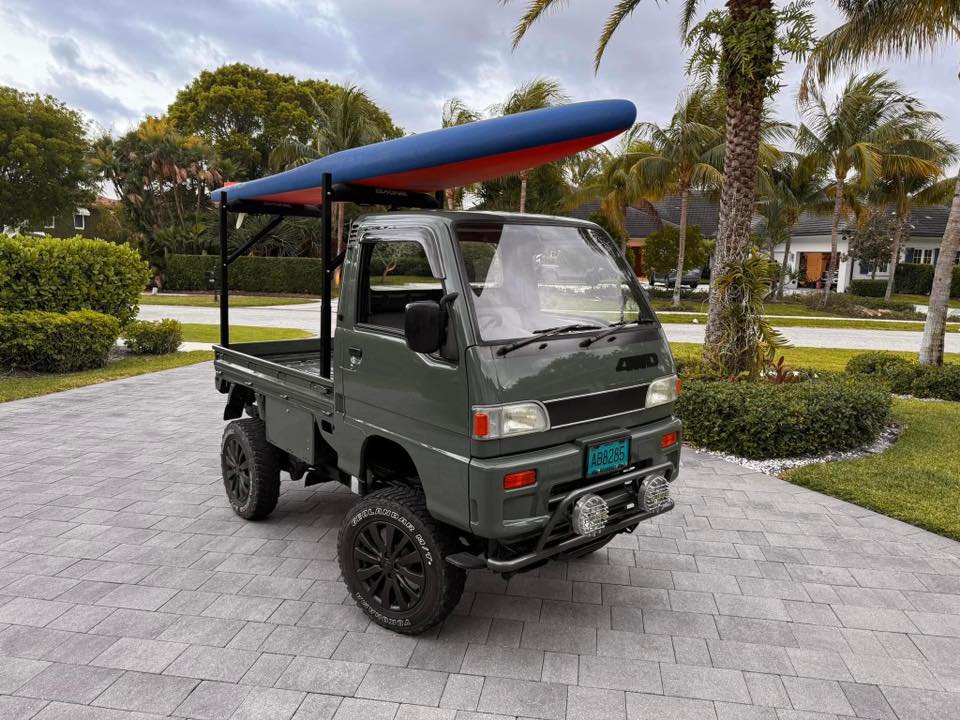
Even though Kei trucks look tiny next to American pickups, they’re incredibly useful. Farmers and landscapers love them because they can haul tools, dirt, and supplies, but still fit through tight spaces that bigger trucks can’t. Four-wheel drive models can handle mud, sand, and rocky terrain with ease. In cities, people use them for food delivery, street vending, and maintenance work. They also save money. Most Kei trucks get 35 to 45 miles per gallon (MPG), a massive improvement from American behemoths like the Ram 1500, which gets 15-22 MPG from its 5.7L V8. The engines are simple, which makes them reliable, cheap to fix, and easy to work on yourself. Since they use less gas, they’re better for the environment and they give off lower emissions.
If Kei trucks are so great and useful, why aren’t they everywhere in the U.S? The problem is that many state governments either restrict them or completely ban them on public roads. The reasons mostly come down to safety rules, emissions standards, and government confusion.
Kei trucks don’t meet U.S. safety standards. They were built for Japan, where traffic is slower and the roads are smaller. They don’t have airbags or modern crash protection like American vehicles do, and they’re much lighter, so officials worry they wouldn’t hold up in a crash with an SUV or pickup. They also don’t go through U.S. emissions testing. Even though their small engines pollute less than most other vehicles, the EPA (Environmental Protection Agency) doesn’t have a category for them, so they often get labeled as “off-road use only.” That means they can only be legally driven on private land, farms, or campuses. Every state has different rules about these trucks, which adds to the confusion around them. Some states, like Texas and Tennessee, allow Kei trucks to be registered as “low-speed vehicles,” but others, like New York, completely ban them. This creates a confusing situation where the same truck can be totally fine in one state but illegal just a few miles away. For people who use them for work and business, the inconsistencies can be frustrating.
Some of these bans and limits make sense on paper, but when you start to think about other vehicles that are allowed on the road, these arguments begin to crumble. For example, side-by-sides, golf carts, and ATVs can often be driven on public roads in certain areas. Motorcycles remain fully road-legal, without any unnecessary bans or limits on use or speed. Kei trucks are safer than all of these vehicles because they have enclosed cabs, headlights, turn signals, and seatbelts.
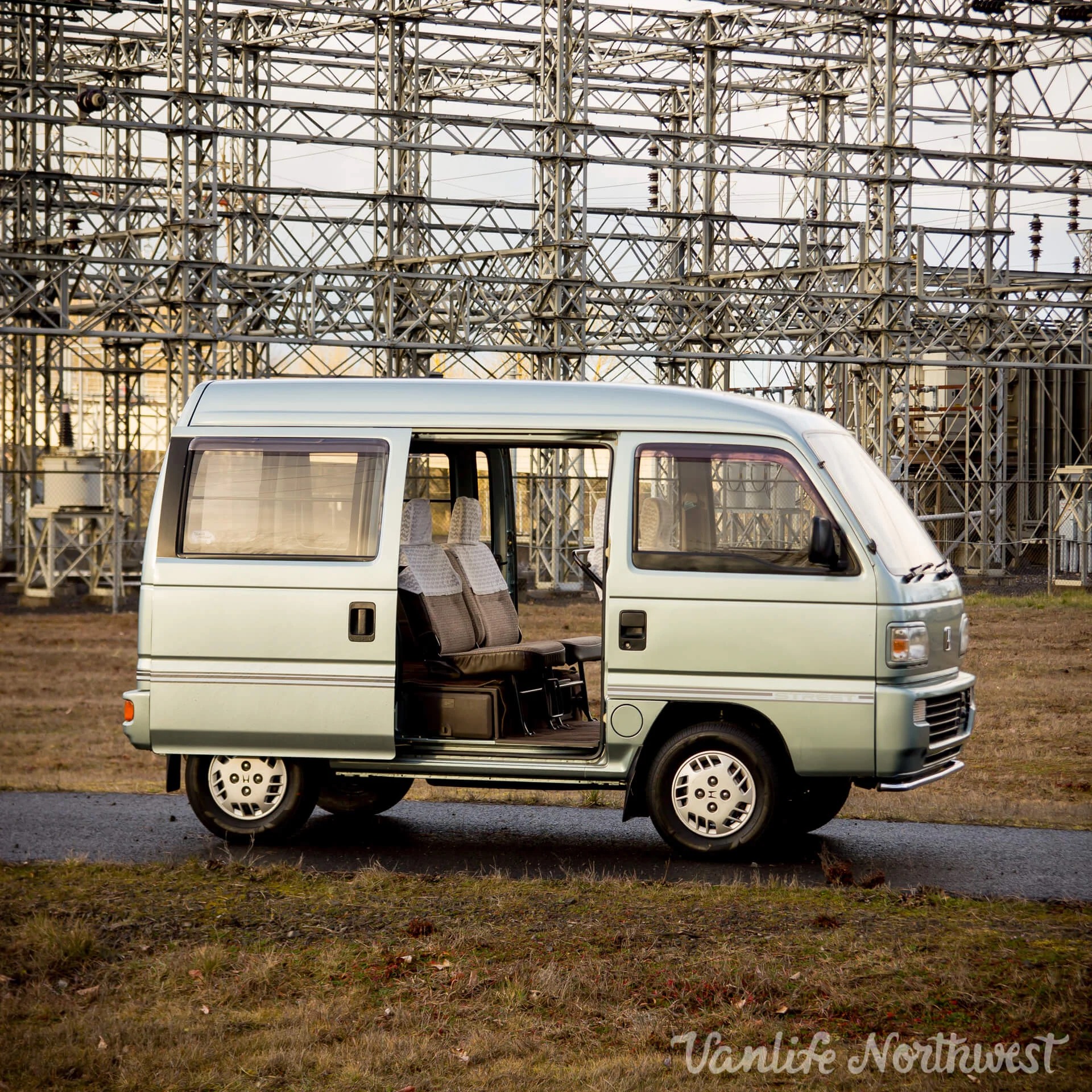
So who are these lawmakers really protecting? Many speculate that these laws are being put into place because of pressure from large American truck manufacturers. Once the average American realizes that they do not need a brand new, $60,000, 5000-lb pickup to pick up a sheet of plywood and some 2x4s from Home Depot, these American manufacturers could lose a portion of their sales. Kei trucks can be found in the U.S, with the sometimes challenging task of importing them already done, for less than $6,000! They can complete most of the tasks that are asked of huge, modern pickup trucks, with the exception of hauling people around. Luckily, there’s a perfect solution. Kei vans!