Let’s get this straight, most of us envision learning as listening, reading, and anything that has to do with paying attention to something or someone else.
But get this, when you create—whether that’s writing, building, drawing, coding, or explaining—you take what’s floating in your head and give it shape. You test what you actually understand. You fill in gaps you didn’t know existed. Creating is what turns ideas into ability. Simply, it gives you clarity.
When you try to make something new, it’s up to you. You have to put in effort—remember this—and that effort makes it more memorable. When things are more memorable, you can remember them more (duh). Therefore, you actually understand what is happening and can apply whatever you are learning/creating.
When you read or watch something, it feels like progress, but it’s usually just recognition. You see a formula and think, “Oh yeah, I know that.” But the moment you try to use it without looking, you realize how chopped that knowledge was. On the other hand, every time you make something, your brain organizes what it knows in a way you understand it. You remember details better because you had to use them, not just see them.
Also, let’s get this straight. We do not learn to memorize and simply have that knowledge in our mind. We have that information to understand it and potentially apply it. Because the purpose of learning is to know more, and also to learn more.
Creating forces you to decide, to try, to fail, and to adjust. Those small moments of struggle make your brain stronger. When you write, design, or build, you’re constantly solving problems and making choices. That process is what burns the knowledge into you. It becomes something you can rely on, not just something you recognize on a page.
We all love to feel productive. Watching a lesson, taking notes, or scrolling through study tips gives you that small rush that says, “I’m learning!” But that’s not happening! You are giving your brain the impression that learning is happening when it isn’t.
Creating is slower. It exposes what you don’t know, but that’s the whole point. Each time you get stuck or mess up, you discover exactly what to improve. That moment of struggle is more valuable than hours of passive review.
Our brains have limited “brain points” to place effort into for understanding, and when you go slow . . . you have more time to recover those brain points—think of points like video game skill trees.
Think about anything you’ve ever mastered: writing a paper, cooking a recipe, shooting a basketball, solving a math problem. You didn’t get good by studying every step in theory—you got good by doing it. Every skill works that way.
- If you want to learn science, run your own small experiment.
- If you want to learn a language, write your own sentences or record yourself speaking.
- If you want to learn design, make something and critique it.
- If you want to understand history, try explaining it in your own words as if you were teaching someone else.
Understanding is also being able to achieve internal coherence, meaning that you can explain things to yourself and all the whys of it.
Creating doesn’t have to mean writing a full novel or building an entire app. You learn best when you make something small every day. These “micro-creations” take the pressure off and let you focus on progress instead of perfection.
Examples:
- After reading a chapter, write a short summary in your own words.
- After watching a tutorial, try using one idea from it.
- After learning a formula, make up your own example problem and solve it.
- After listening to a podcast, record a quick voice note explaining what stood out to you.
THE BIG IDEA IS THAT YOU MAKE THE EFFORT TO USE WHAT YOU LEARNED.
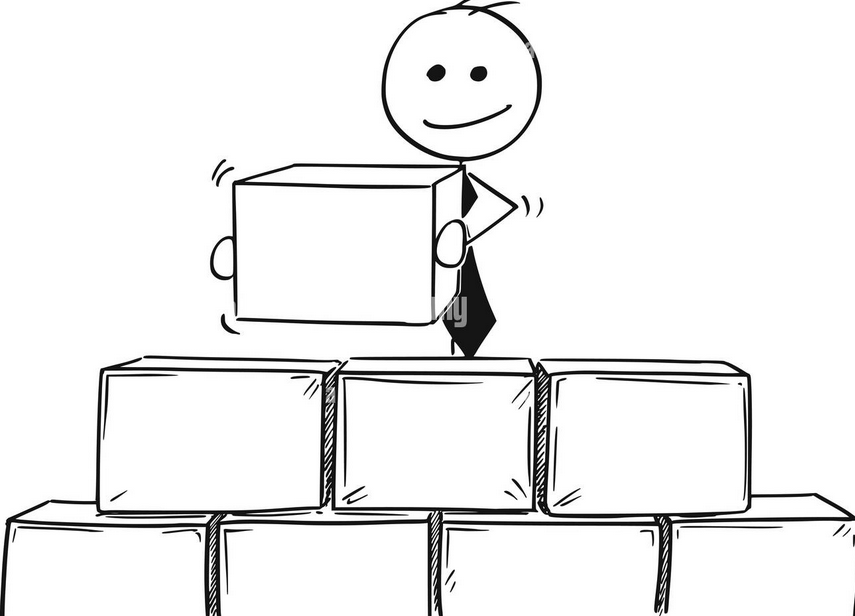
Each small act cements what you’ve learned a little deeper. Over time, these small pieces stack up. You won’t notice the change right away, but weeks later, you’ll realize how tall that stack becomes.
A good path to follow is to first get the theory by learning via reading, listening, whatever; afterwards, apply the information you learned by creating experiments or summaries of what you learned.
Every cycle strengthens your skill. You learn faster because each mistake gives instant direction. Instead of endlessly reviewing, you’re always moving forward.
Writing this article started as an exercise in explaining something I believed: that creating helps people learn. I thought I already understood the idea. But sitting down to actually create the piece changed everything.
At first, I kept pausing. I couldn’t find the right words to explain why creating mattered so much. I realized that understanding a concept in theory isn’t the same as expressing it clearly. I had to rewrite sections, rearrange paragraphs, and rethink my own examples. Each revision forced me to sharpen my ideas and cut the fluff.
By the 6th or 7th draft, I noticed something new: I wasn’t just writing about creating to have others learn—I was learning through creating. Every sentence became an experiment. Every stuck moment revealed a gap in my understanding. By the time I finished, I discovered that I was not only writing to share what I believe—I was actually living what I shared.
This article taught me more about the topic than any source could have. The process itself was proof. The effort, the rewrites, the reflection: all of it deepened what I knew. It wasn’t research that made the idea real. It was creation. And that creation doesn’t always have to be published.